.png)
-resized-7eadfbdc0fa74413a51e54563cc54b81a858a7cd3ee4158483d9d3cb3661127c.png)
What Boards Should Expect From Their Meeting Minutes
Meeting minutes are more than a summary of what was discussed. For condominium boards, they are official corporate records that document decisions, direction, and accountability.
Despite their importance, expectations around meeting minutes are often unclear. Some boards expect transcripts, while others expect only high-level summaries. Without alignment, dissatisfaction and confusion are almost inevitable.
Minutes Are a Record of Decisions, Not Dialogue
One of the most common misconceptions is that minutes should capture everything that was said during a meeting.
In reality, effective minutes focus on outcomes. They document motions, decisions, and key direction provided by the board, not the full back-and-forth discussion that led there.
This approach keeps minutes concise, readable, and useful as a governance record.
Consistency Matters
Boards should expect consistency in format, tone, and level of detail from one meeting to the next.
Consistent minutes make it easier to review past decisions, track patterns, and rely on the record over time. They also build confidence among owners and stakeholders who may review them.
Clarity Supports Accountability
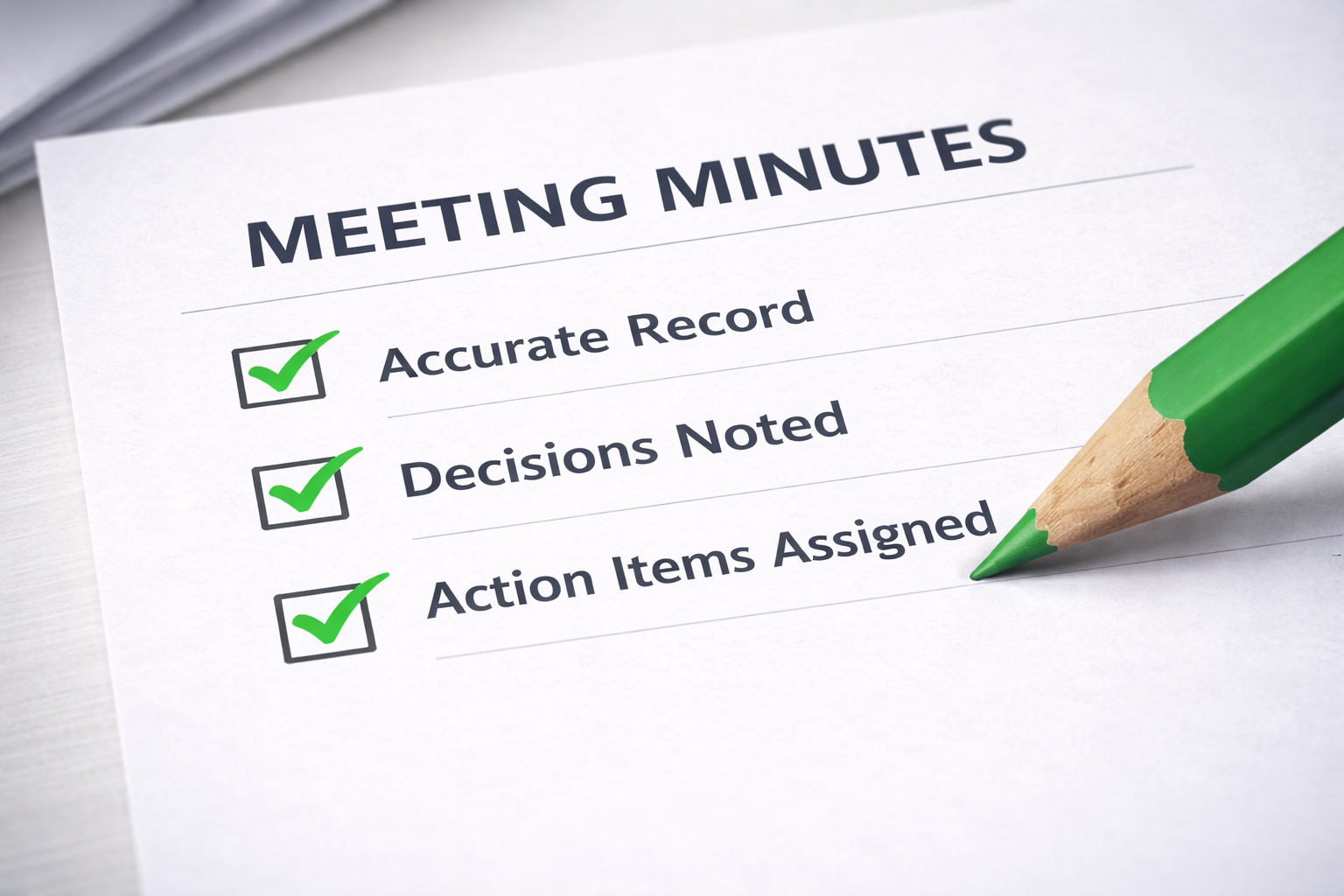
Well-prepared minutes clearly identify:
- What decision was made
- Who is responsible for follow-up
- Any timelines or conditions attached
When this information is missing or vague, follow-through becomes difficult and disputes are more likely to arise later.
Neutrality Is Essential
Minutes should be factual and impartial. They should not reflect opinion, emotion, or editorial commentary.
Neutral language protects the board, the corporation, and the integrity of the record, particularly if the minutes are ever reviewed externally.
Final Thought
Boards should expect their meeting minutes to be clear, consistent, and focused on decisions and direction.
When expectations are aligned and minutes are prepared professionally, they become a reliable governance tool rather than a source of frustration.